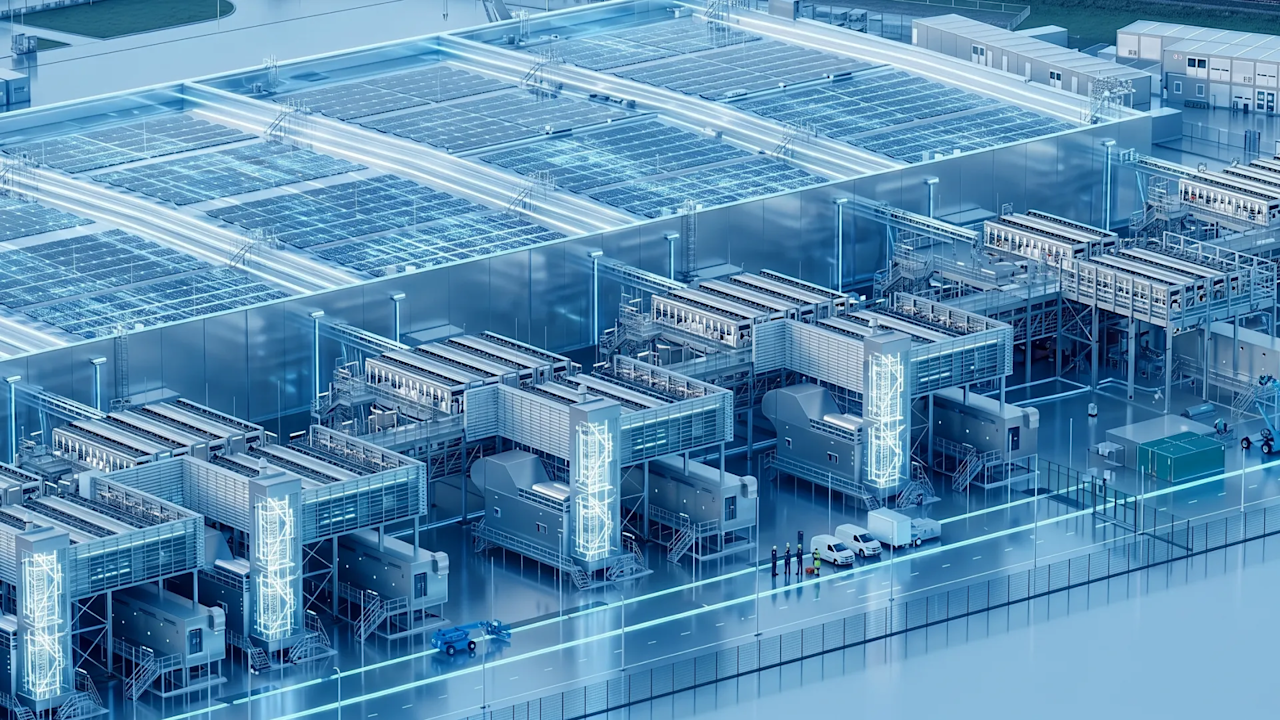
Until relatively recently, the datacenter industry followed a familiar trajectory. Each generation delivered more compute, faster networking, denser storage, and better efficiency. Although AI hasn’t changed the goals, it has dramatically changed the constraints.
On that note, the most recent episode of the Shared Everything podcast brings together five perspectives from across the AI infrastructure ecosystem to talk through the tradeoffs.
This week we pulled together some of our best chats around this theme. Listen as Renen Hallak, CEO and Cofounder of VAST Data, discusses why power has become the primary design constraint for next-generation AI infrastructure.
Energy researcher Jonathan Koomey puts today’s AI power demands into historical context through decades of datacenter efficiency trends.
Ken Patchett, VP of Datacenter Infrastructure at Lambda, explains what it takes to build facilities that can keep pace with rapidly evolving AI hardware.
Rich Miller, Founder and Editor of Data Center Frontier, examines how architecture, networking, power delivery, and cooling are converging around high-density AI deployments.
And finally, Dan Nishball, Research Analyst at SemiAnalysis, explores whether falling launch costs could eventually make space-based datacenters economically viable.
Across this episode, one theme emerges again and again: AI isn’t simply demanding more infrastructure, it’s changing how infrastructure is designed.
What begins as a discussion about power quickly expands into broader questions about efficiency, cooling, networking, facility design, and even where future datacenters should be built. The result is a conversation that spans the entire AI infrastructure stack, from the electrical grid to the application layer.
Along the way, the discussion explores how the industry is responding to unprecedented power densities, why efficiency remains one of the most important engineering challenges despite today’s rapid buildout, and how datacenter operators are rethinking everything from cooling architectures and power delivery to facility planning and hardware lifecycles. It also examines how evolving regulations, sovereign AI initiatives, and regional infrastructure requirements are influencing where AI capacity is deployed and how those facilities are designed.
The episode closes by looking even further ahead, asking whether the economics of launch costs and orbital infrastructure could eventually make space-based datacenters technically and financially practical. Whether the topic is nuclear power, liquid cooling, high-speed networking, or infrastructure beyond Earth, every conversation points to the same conclusion: the future of AI will be shaped as much by advances in infrastructure engineering as by advances in the models themselves. Taken together, these conversations illustrate something larger than AI, capturing what can only be described as a generational transition in infrastructure engineering.


