
Enabling Researchers to Computationally Perform Science
SciNet consolidated 30PB of storage onto the VAST AI OS to power massive parallel compute and AI workloads.
Industry
Education
Use Case
Artificial Intelligence
Video
Overview
SciNet, the supercomputing center at the University of Toronto, provides Advanced Research Computing infrastructure for Canadian academics. Supporting fields from ocean modeling to AI, SciNet operates national supercomputing assets, including Trillium, equipped with 240,000 cores and 250 GPUs.
Solution
SciNet adopted the VAST AI Operating System to replace legacy parallel file systems and eliminate complex storage tiering. Deploying a unified 30PB all-flash platform, SciNet established a high-performance foundation capable of feeding its CPU and GPU clusters without network saturation.
Results
With the VAST Data Platform running flat-out in production, SciNet eliminated burst buffers, achieved a 2:1 data reduction ratio, and simplified administration, allowing researchers to run ocean simulations and AI workloads seamlessly.
Additional resources you may find useful
View All Resources
Customer Story
USC CARC Accelerates Research Workloads with VAST
See how USC CARC deployed VAST to simplify administration and power data-intensive AI research.
Blog Post
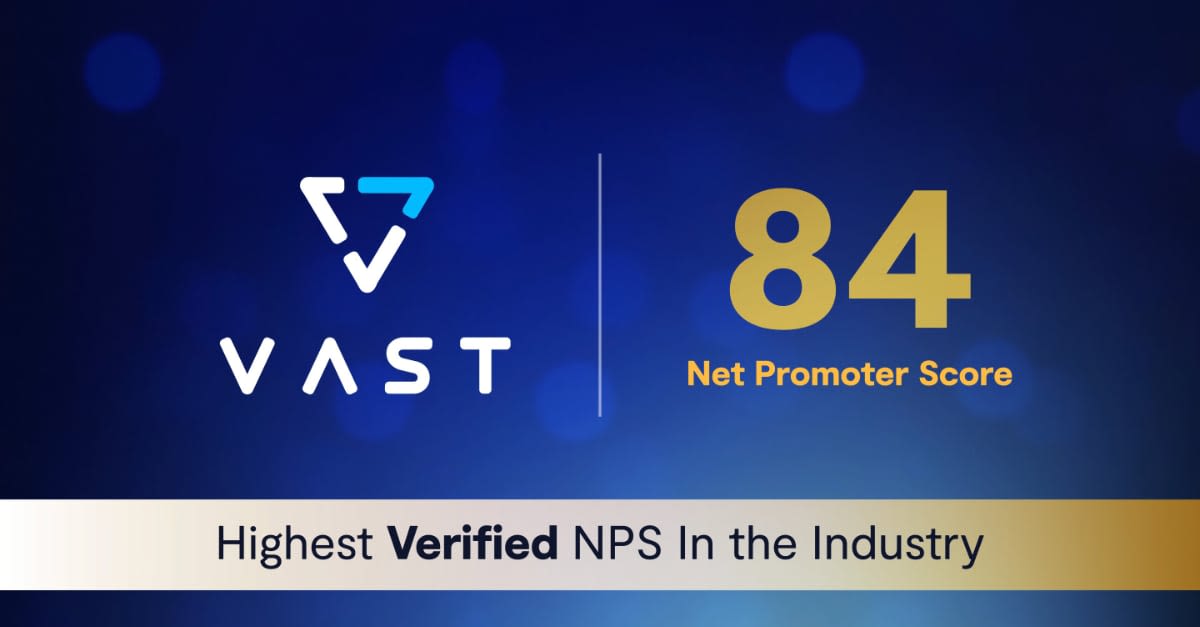
VAST Announces NPS Score of 84
We are thrilled to share our latest milestone: an industry-certified NPS of 84, an extraordinary achievement that places us among the most customer-loved companies worldwide.

Analyst Paper
Melius Research: VAST Data Could Win Big in Agentic AI
For infrastructure professionals, this paper provides essential insights into a solution designed for scalable, autonomous AI systems. Download now to explore its competitive edge and what it means for your infrastructure strategy.
Join the VAST Community
Discover how visionaries, architects, and technologists are shaping the future of data. Collaborate, learn, and grow with the minds building tomorrow's data infrastructure.