
NHL and VAST: Accelerating and Streamlining Media Production Operations
The NHL and VAST Data have collaborated to innovate and transform the way the NHL manages, stores, and distributes its media.
Industry
Media & Entertainment
Use Case
Artificial Intelligence
Enterprise Backup
Recovery

Overview
Over the past five years, the National Hockey League (NHL®) and VAST have collaborated to innovate and transform the way the NHL manages, stores, and distributes its media. This has helped enhance the League’s archival workflows, expanded into real-time game footage operations, and enabled future advancements in AI-powered content discovery.
Results
The NHL’s content is now readily accessible for AI-driven discovery, automated metadata tagging, and new content creation.
Over 550,000 hours of video footage
Over 25 million images
VAST installed in all 32 NHL arenas
Overview:
Over the past six years, the National Hockey League (NHL®) and VAST Data have collaborated to innovate and transform the way the NHL manages, stores, and distributes its media. This has helped enhance the League’s archival workflows, expanded into real-time game footage operations, and enabled future advancements in AI-powered content discovery.
At the forefront of this transformation are Grant Nodine, NHL Senior Vice President, Technology, and Derek Kennedy, NHL Vice President, Media Operations and DevOps.
Background
The collaboration between the NHL and VAST began six years ago when the NHL sought a data platform for its production workflows. At the time, the League was looking for a data platform capable of managing their growing media content, which included live games and archival footage. According to Derek Kennedy, “We weren’t looking necessarily for solutions for our data; we were looking for a platform for our production arm.”
Initially, VAST didn't have the SMB protocol the NHL required for desktop user access. However, VAST committed to co-developing the protocol to meet this need. As Kennedy recalls, “We took a risk and did an engineering exercise to build the SMB protocol. Three months later, it was in production for the NHL to leverage and for all other VAST customers to use.” This commitment to partnership and co-innovation became a cornerstone of the relationship, with VAST engineers collaborating directly with the NHL.
This successful collaboration led to an expanded relationship and the NHL moved its footage archive, consisting of over 20 petabytes of data, onto the VAST Data Platform. This decision not only ensured the longevity of their archival content, but also set the stage for future AI-driven innovation. As Kennedy put it, “We have set ourselves up for future AI and machine learning workloads that will benefit the content generation business later down the line.”
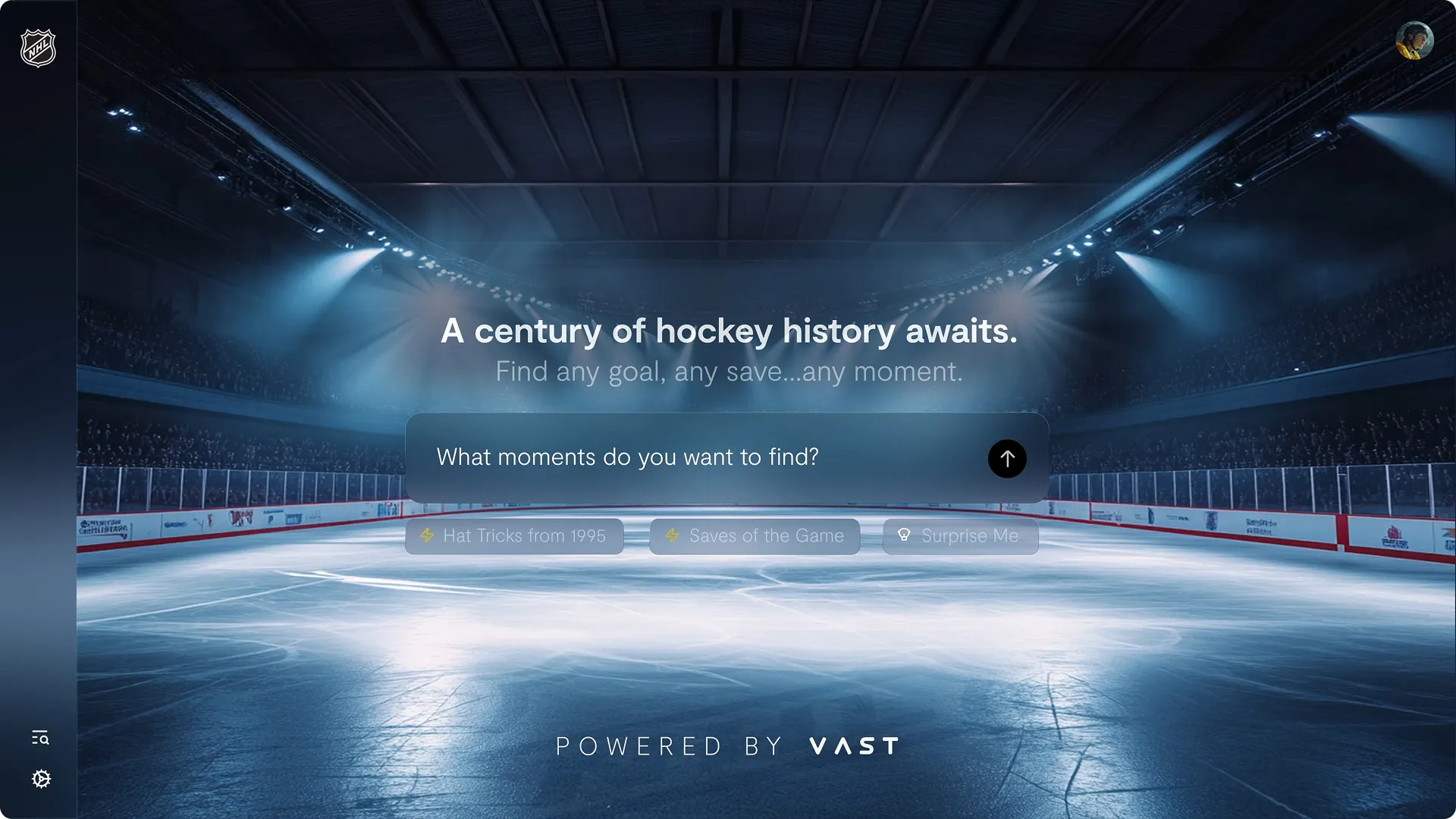
After the successful archive implementation, the NHL turned to VAST to support their in-arena game footage content and data needs. The goal was to modernize and streamline the way game footage was captured and transferred from all 32 NHL arenas to NHL headquarters in New York City. “We had great success with VAST in the past,” Kennedy explains, “so when we needed to replace storage in the arenas, we decided to future-proof ourselves by implementing VAST in all 32 arenas.”
In response to the NHL’s needs, the VAST Research and Development team tested this workflow and collaborated with the NHL on the rollout of all arena systems to ensure content was flowing efficiently to the NHL headquarters in New York City. “VAST replication expands up to 36 sites and now each one of the 32 different NHL arenas sends digital content to a single platform. We've set the table to create a content platform that exists at the edge, where the game is being played,” says Kennedy.
Enabled by the VAST DataSpace, this real-time replication significantly reduces the time it takes for game footage to become available for post-production and distribution among teams and media partners. This operational speed is critical for modern media workflows, where there is a high demand for quick turnaround times. With footage stored locally at each venue and made quickly available at the NHL NYC headquarters, editors and production teams in different locations can work on game highlights and other content without needing to be on-site.
Results
The NHL’s work with VAST has also been critical in preserving the League’s rich history. As Grant Nodine said, “We’ve taken it very seriously making sure that our history is safeguarded. It’s important, our archive is a huge asset for us.” The migration from LTO tape to the VAST Data Platform has not only safeguarded historical game footage, but also enabled the NHL to explore and leverage those assets in new ways.
Nodine comments: “As AI and machine learning technologies continue evolving, we’re able to continuously leverage our entire archive. Having our archive readily accessible on a very performant data platform gives us a lot of opportunities to discover more about those assets as time goes by.” By having all their archival data readily accessible on a single data platform, the NHL can now run AI-driven discovery tools on its assets, creating new opportunities to uncover gems from its history.
The NHL is now exploring how the VAST DataBase and DataEngine can further enhance NHL operations, particularly through AI and machine learning. AI models will be used to automate the process of tagging and enriching footage with metadata. This involves tasks such as recognizing key moments in games, identifying players, and detecting logos or specific events. Traditionally, this process would require manual logging, but with AI, it becomes automated and scalable for all footage. This automated metadata tagging allows the NHL to make its footage more discoverable and accessible to editors and producers. “We have quite a bit of metadata already. We can now improve upon metadata capture because there have been a bunch of generational jumps lately that unlock tagging capabilities which didn’t exist before,” points out Nodine.
This partnership is a testament to the power of collaboration, and the future holds even more exciting possibilities for both the NHL and VAST Data.
We have set ourselves up for future AI and machine learning workloads that will benefit the NHL content generation business later down the line.
Additional resources you may find useful
View All Resources
Blog Post
How the NHL® Turned a Century of Footage Into a Real-Time AI Engine
VAST, NVIDIA, and the NHL unveil how AI turned 100+ years of hockey footage into a real-time storytelling engine at GTC 2025.
Video
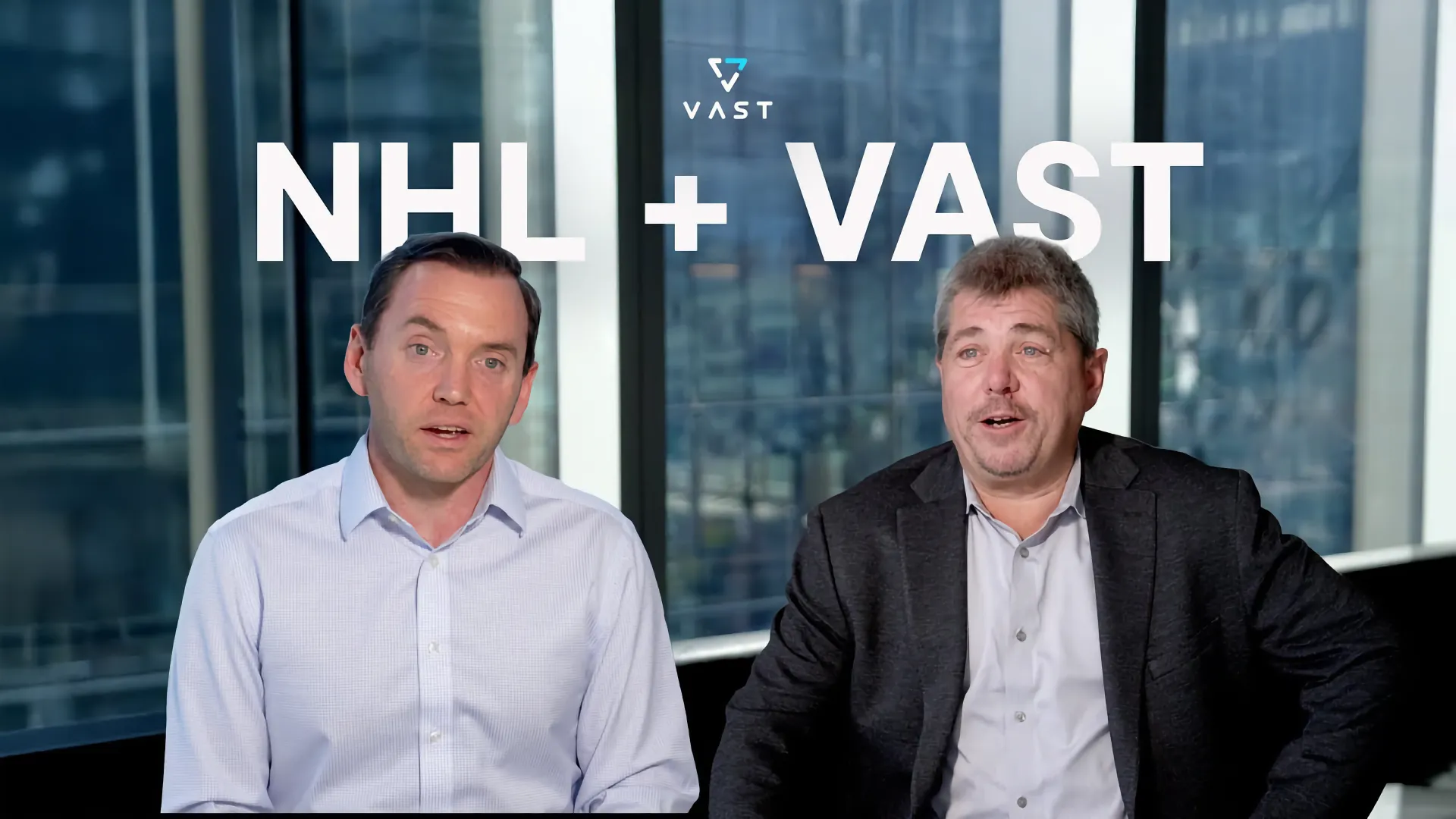
NHL + VAST: Five Years of Co-Innovation
The NHL and VAST Data are revolutionizing media management, storage, and distribution. Hear from NHL leaders Grant Nodine and Derek Kennedy.
Press Release
National Hockey League Partners with VAST Data to Accelerate and Streamline Media Production Operations
Deployment of the VAST Data Platform across all 32 NHL arenas will simplify management of over 20 petabytes of League data.
Join the VAST Community
Discover how visionaries, architects, and technologists are shaping the future of data. Collaborate, learn, and grow with the minds building tomorrow's data infrastructure.