VAST and the National Hockey League (NHL) have been working closely over the past few years on modernizing the league’s approach to capturing and utilizing video footage from NHL games.
A major focus has been the creation of a single logical storage cluster across all 32 NHL arenas, as well as at the NHL’s New York office. VAST clusters installed at each location utilize the VAST DataSpace functionality to enable a single namespace, meaning video files uploaded from any arena are accessible by the NHL Studios team at the New York HQ in real-near time. They no longer need to wait for large, overnight file transfers before they can get to work editing game footage from across the League.
Now, the NHL is taking the show on the road with a portable VAST node designed to withstand both travel and the elements — perfect for its slate of tentpole outdoor games each season. By connecting the miniature rack to the existing DataSpace environment, the League can essentially add an extra, on-demand node to its cluster during an outdoor game including either the NHL Winter Classic or NHL Stadium Series.
The node itself isn’t much to look at, but that’s the point: It’s 300TB of capacity specifically designed to run outside of a traditional data center, even outdoors or in a loading dock if necessary.
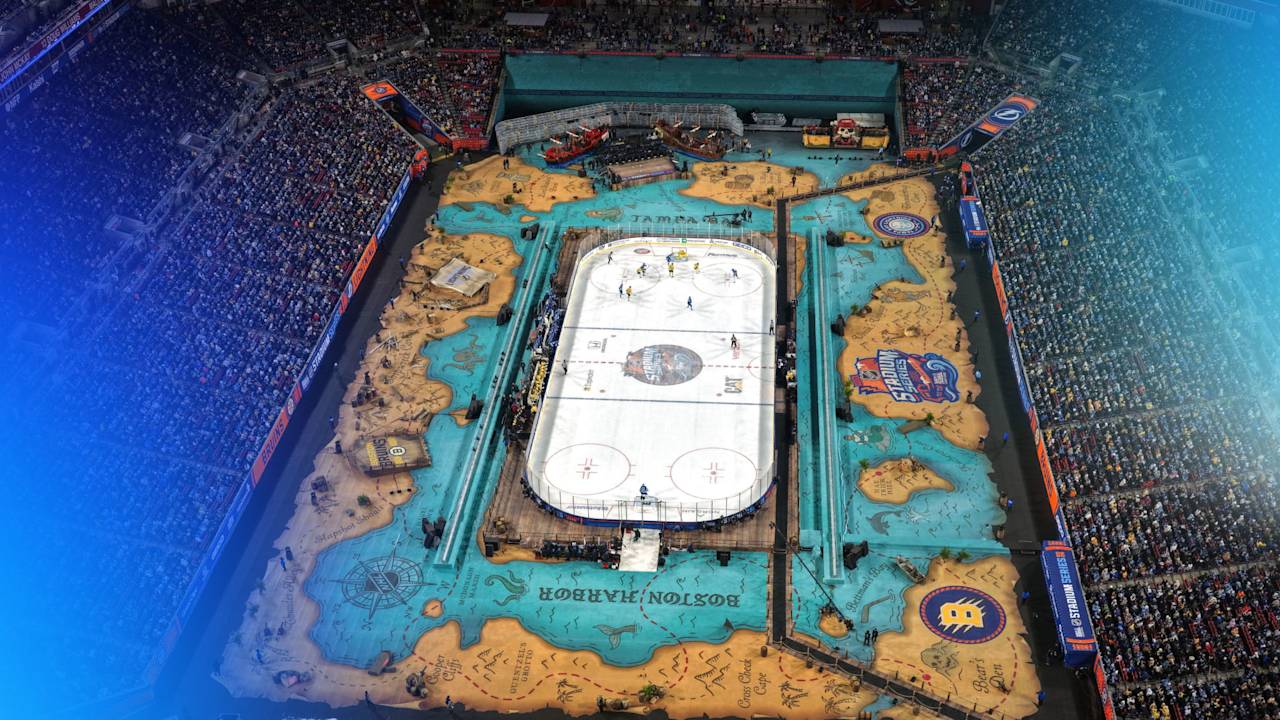
The NHL conducted a pilot with the portable node on February 1 at the 2026 Navy Federal Credit Union NHL Stadium Series™ game played at the Raymond James Stadium in Tampa, Florida, featuring the Boston Bruins® and Tampa Bay Lightning®. The results were promising:
Rock-solid system stability throughout the weekend
Successful and secure replication of more than 2 terabytes of footage
Minimal turnaround time
Apart from game footage, though, NHL outdoor games are exciting weekend-long marquee events unto themselves. As a result, the NHL studio’s team records hundreds of hours of footage including team arrivals and practices, and captures more ad hoc and casual behind-the-scenes footage. By running a VAST node on-site, the league can feed fans’ appetites for hockey content, and generate more pre and post-game buzz, via faster production and improved collaboration between on-site crews and NHL studios.
“The success of this pilot validates that the VAST cluster can reliably support full-scale event workflows outside of the arena environment, allowing the NHL to scale rapidly and deliver engaging content to our fans in an efficient and timely manner,” said Derek Kennedy, vice president of media operations and DevOps for the NHL.
In addition, it creates a path to enable AI-driven visual recognition workflows and automated media-management pipelines that unlock advanced workflows for content creation, tagging, analytics, and more.
But the NHL isn’t done innovating on its media-production processes. In the near future, it will enable direct connections between in-arena, and remote, VAST nodes and NHL Studios workrooms, allowing for seamless workflows and greater flexibility. Additionally, the league is looking into secure and efficient approaches for external contractors to upload video footage directly into VAST clusters.
“The work we’ve done with VAST to extend our media workflow to any venue has set the stage for scalable content generation,” said Kennedy. “This unlocks a distributed, resilient media-operations model that accelerates content creation, reduces manual work, and future-proofs our infrastructure for advanced AI-driven workflows. The next phases will fully operationalize this approach across major events and league-wide arenas.”


